




Insights from Japan’s Legal Recruitment Market
This is your go-to resource for staying ahead with legal industry updates and legal career tips for the Japan market. Here, we share the latest industry news, hiring trends and career advice tailored for legal professionals in Japan.
Just Legal Insights – Featured Articles

Anthony Luna: Where Career Transformation Meets Innovation Anthony Luna did not set out to become a legal leader in Japan. His journey began far from corporate boardrooms, shaped instead by practical necessity, early responsibility, and courage to step into unfamiliar territory - the kind that could unsettle many, yet reveals its value only to those committed to excellence and continued self-transformation. He grew up in circumstances that necessitated early independence. Having financed his higher education entirely on his own, not uncommon in the U.S., for him law was initially a dream calling. But it was one with significant personal financial risk if he failed to succeed. It was also a rational decision - one of the few professions that offered both financial flexibility and, importantly, the opportunity to be useful to others. His commitment to doing work that mattered would remain a constant throughout his life. Despite being a familiar figure in Japan’s legal community today, Anthony’s connection to the country was anything but inevitable. His first encounter with Japan came unexpectedly in high school, when a Japanese-American friend invited him along on a family trip to Tokyo and Okinawa. At the time, it felt incidental - an interesting summer experience, nothing more. Only years later would that early exposure reveal itself as the opening chapter of a much longer story. Years later, that early encounter with Japan resurfaced in a practical way. Looking for initial employment after university - and to grow and experience life beyond California - Anthony applied to overseas English-teaching programs in both Europe and Japan. He was selected for the Japanese government’s JET Programme (Japan Exchange and Teaching Programme), an initiative that places young professionals in schools and local governments across the country to support education and international exchange. Anthony was initially assigned to a high school in Yokohama, but after intensive self-driven Japanese study and later successfully passing the Level 1 Japanese Proficiency Exam after approximately two years of self study, he transitioned into Yokohama City Government, working directly with the mayor’s office at the Office of International Relations. What began as basic support on international matters quickly evolved into a far more demanding role. He found himself taking an active role in meetings including senior local politicians, mayors and chambers of commerce presidents, executives from Japan-based companies, and visiting U.S. military officials - often as the youngest person in the room, and often the only foreigner on the Japanese side of the table. One of his first assignments was to help greet and interpret for the former U.S. Vice President Walter Mondale and the Mayor of Yokohama City, a great moment for him that also humbled him and made him realize how much more he would need to grow in so many ways. “That was actually one of my first assignments. I didn’t do very well, to be honest - but the experience opened my eyes - both to the opportunities ahead and to how much I still had to learn, and how quickly I would need to grow to be a professional in any setting.”
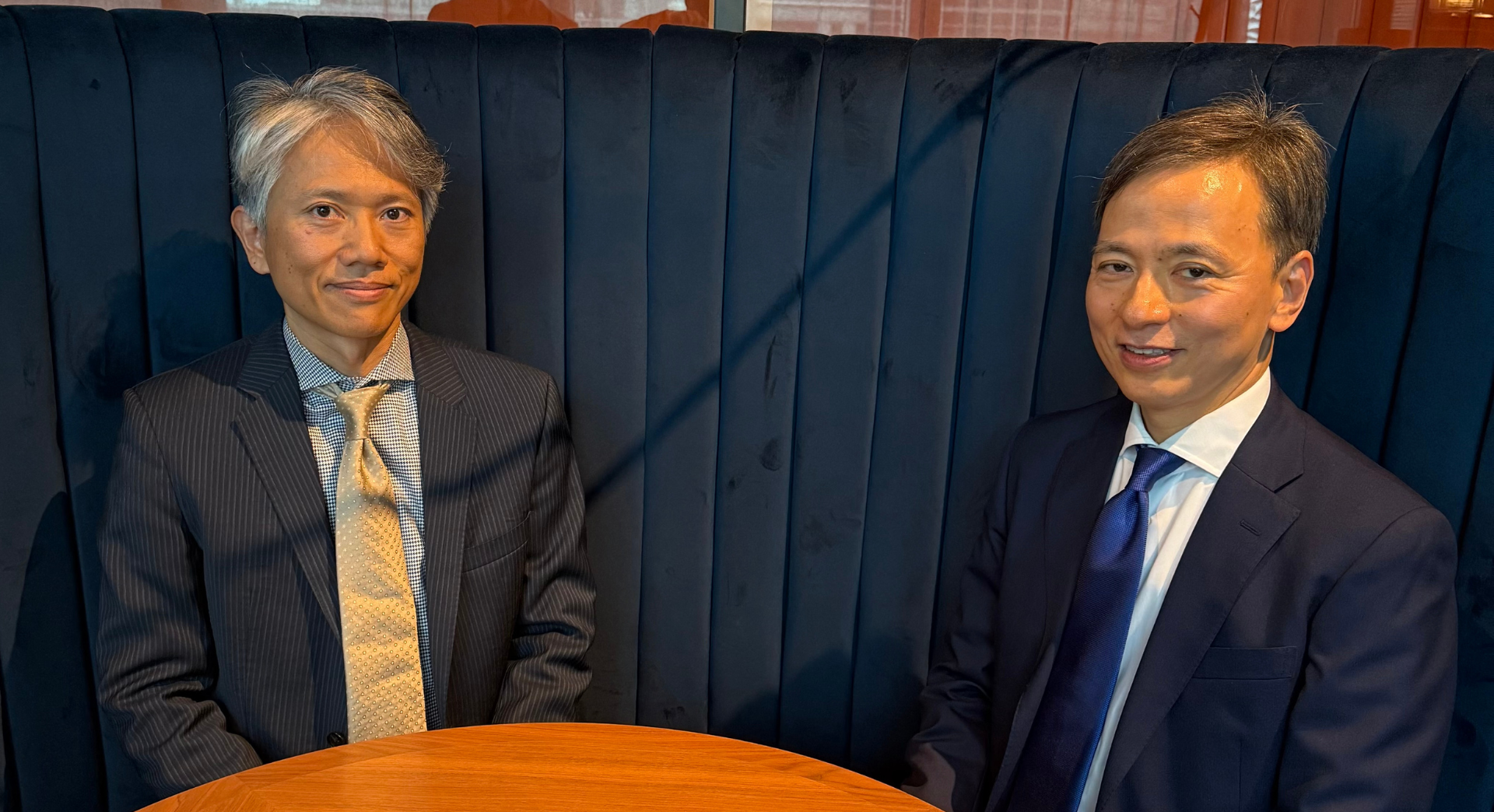
Lunch with Eshima-sensei - Before I realized it, nearly 20 years had passed since we first met. Perhaps because we’ve shared so much time over the years, I can say this with confidence: his presence has always been consistent. Calm in demeanor. Thoughtful in his words. Never making others feel guarded. He brings humor when appropriate, yet never disrupts the atmosphere of the room. Today, the value and significance of in-house lawyers—especially General Counsel as part of senior management—are widely recognized. But when Eshima-san moved in-house more than 20 years ago, that perspective barely existed in Japan. In fact, there was even a bias that going in-house meant you hadn’t succeeded in private practice. Against that backdrop, he steadily built credibility through both hands-on legal work and management, earning the trust of those around him. The respect that the in-house legal profession now commands is the result of efforts by pioneers like him. I believe Eshima-san is one of those who quietly helped shape that evolution from the inside. What often comes up in conversation is his ability to make decisions. But “decision-making” is a complex skill. Personally, I see Eshima-san as a business leader who excels at eliminating "noise." He is careful not to introduce unnecessary friction into stakeholders’ time or decision-making processes. To do that, one must accurately distinguish signal from noise. Sometimes this shows up in very small things—how an approval request is framed, for example. Yet each of these small choices accumulates into trust, eventually leading people to think, “If he’s handling it, we’ll be fine.” I feel that this is the source of his calm presence. As a recruiter who meets many lawyers, this difference becomes apparent very quickly. Those who have been involved in real decision-making—and who have carried both accountability for explanation and responsibility for outcomes—have a distinct sense of gravity. Eshima-san is exactly that kind of person. He shared with me that recently, a younger lawyer had come to him for career advice. He admitted that, at first, he wondered how helpful he could really be. But once they started talking, he realized how many common threads there were—the path they are walking as lawyers, the challenges and rewards, the anxieties and sense of purpose. He said he was struck by how much overlap there was with today’s younger generation. To younger professionals, someone like Eshima-san may seem as though he exists “above the clouds.” But in reality, where he stands today and where younger lawyers stand now are not disconnected. They are on the same ground—he simply happened to be ahead of them. Because he himself has traveled that path, he deeply understands the situation young professionals find themselves in today. He is now hoping to create more opportunities to share his experiences with the next generation. He measures value not by title, not by authority, but by what one can give back to their community. I believe that mindset is one of the reasons he comes across as a leader who transcends the traditional boundaries of being a lawyer.
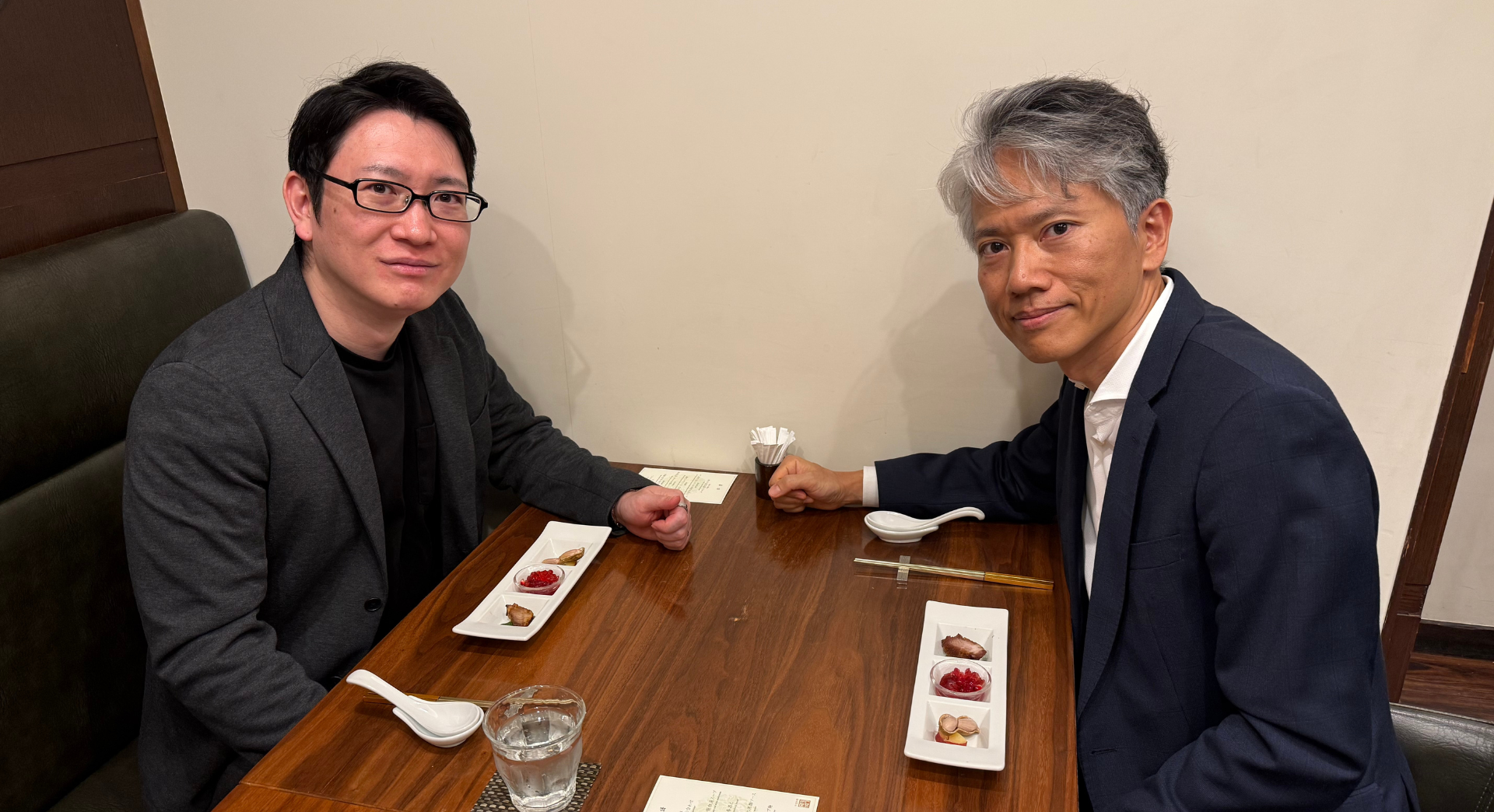
An in depth conversation with Kengo Ozaki, Executive Officer and Head of Legal and Compliance at BuySell Technologies, on career inflection points, in house leadership, and building legal functions close to the business in Japan.
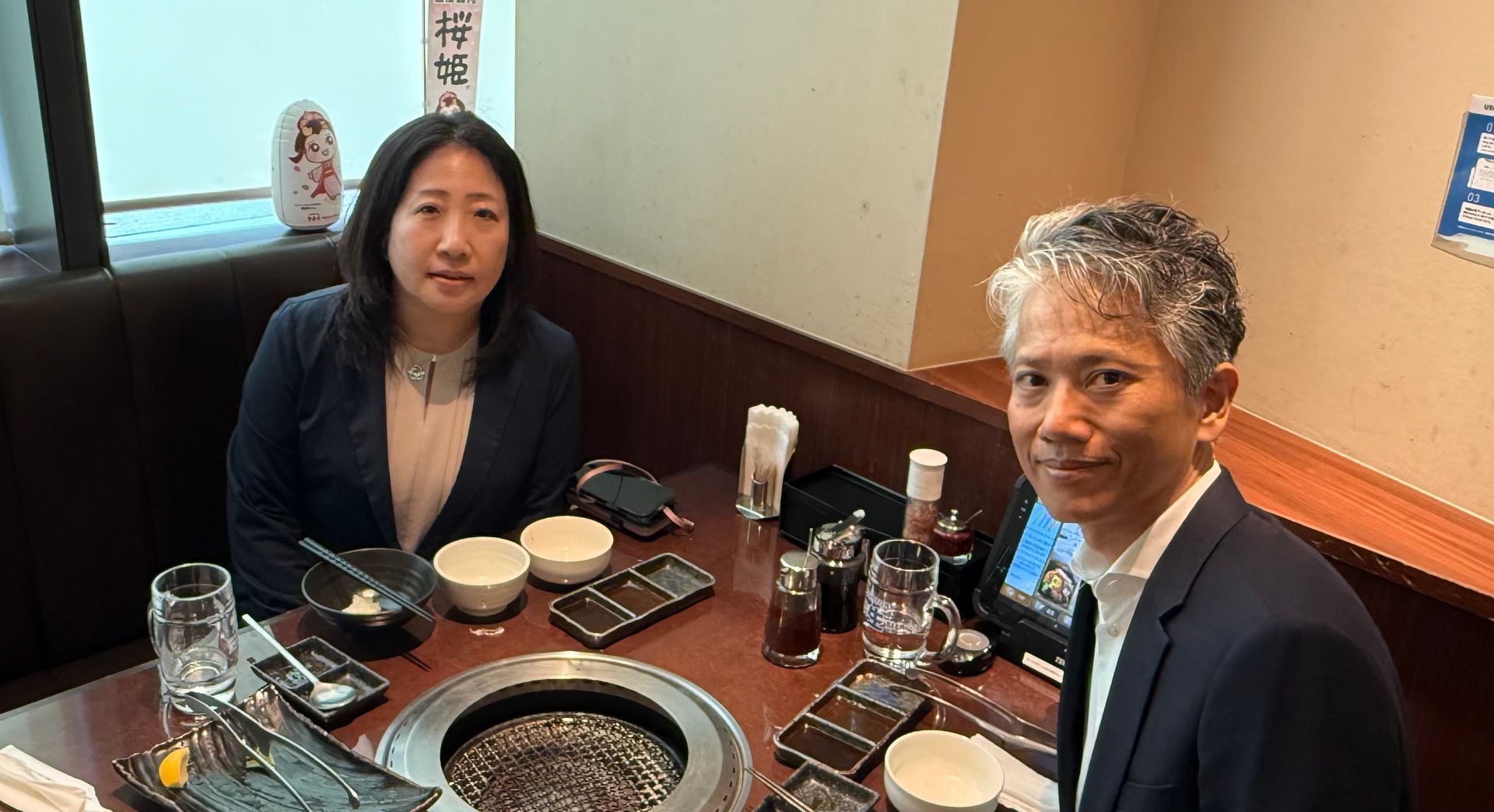
It is often said that lawyers who can also contribute to an organization’s forward progress are rare in Japan. And yet, such leaders certainly exist. At Just Legal, we are continuing our project to meet 50 legal leaders active in Japan’s legal community. Today, I’d like to introduce Ms. Kaoru Kodama , who plays a key legal role at a global company closely connected to the semiconductor industry. Kodama-san is a UK-qualified lawyer with Big Law training. Rather than positioning herself as a traditional “sensei,” she approaches her role as a service and solution provider, working closely alongside the business. That mindset, shaped through years of in-house experience, was particularly striking. “Legal should stay close to the business and help it move forward.” Over the course of her career, she has held several in-house legal roles, and most recently led the legal function at a start-up. Working across organizations at very different stages has given her a balanced perspective on both execution and decision-making. “You can’t improve a system unless you first understand why it exists.” True to this view, her approach is not about rapid or disruptive change, but about building understanding, trust, and dialogue — and from there, enabling steady forward movement within the organization. Combining global standards with a strong sensitivity to local context, she values harmony while continuing to raise the bar in a thoughtful and measured way. In her current role, it is clear that she is contributing as a leader who brings forward momentum to the organization, in a manner well suited to today’s environment. Kodama-san, thank you very much for taking the time to share your perspectives. Your insights offer meaningful guidance for the next generation of legal leaders in Japan.
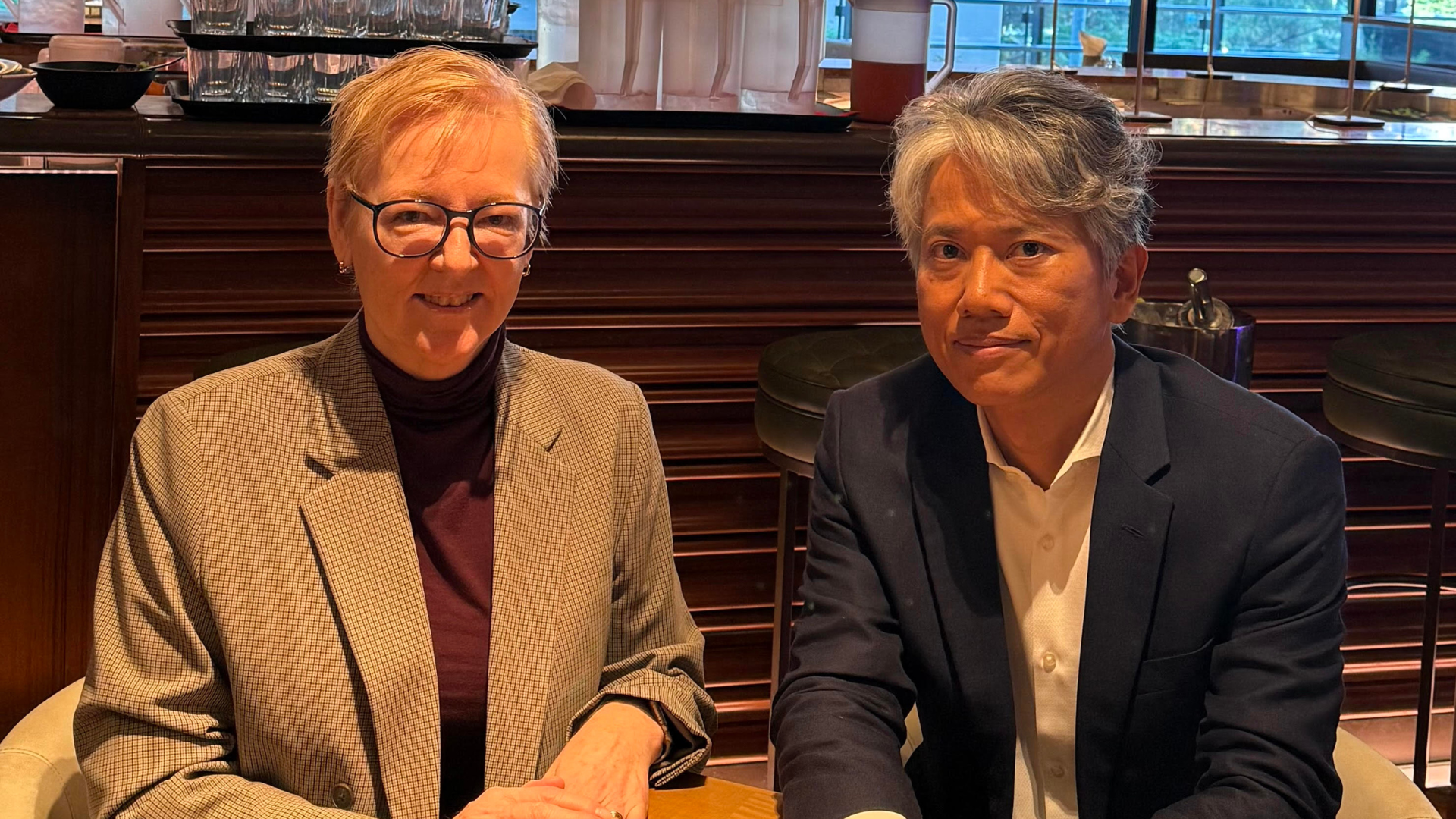
Finding lawyers who also possess the qualities of a true leader is often said to be difficult in Japan. But the reality is — such leaders do exist. At Just Legal, we’re launching a project to meet and highlight 50 leaders in Japan’s legal community. Today, I’m pleased to introduce Robyn Nadler, the Representative Director of Payoneer Japan . Robyn is a qualified Australian lawyer who began her career in Big Law at global firms — and what stands out is not the titles she has held, but her ability to move seamlessly between legal, compliance, regulatory, and leadership roles. Being a representative director is simply one chapter in a broader career built on capability, judgment, and adaptability. “Leadership isn’t a title. It’s the ability to bring clarity in complex situations and help people move in the same direction,” says Robyn. Having spent many years in Japan and fully fluent in Japanese, Robyn has earned a strong market reputation for her understanding of the Japanese regulatory landscape — especially the mindset and behaviors of financial regulators. This is a rare set of skills. “Japan’s regulatory environment isn’t just about rules — it’s about understanding how regulators think. Once you understand that mindset, the whole landscape becomes far more navigable.” Her progression from transactional lawyer to compliance lead, to guiding a regulated financial entity reflects a professional who grows with every environment. Ruth Porat of Google noted once that lawyers are often the strongest cross-functional communicators — able to translate between risk, business, operations, and regulation. Robyn is a textbook example of that in practice. “Lawyers can translate between departments in a way few others can — risk, operations, product, compliance. The value comes from connecting dots that usually stay separate.” Robyn, thank you for taking the time in your busy schedule — your insights are much appreciated, and will continue to inspire the next generation of legal leaders.

Something I think we’ve all struggled with is the generational gap; especially between our generation and the one before us. We tend to see things very differently from how our parents or grandparents do. I’d like to blame it on tech and how fast the world’s changed, but maybe that's’ just me realizing I’m now part of the “older” generation, and not the younger one anymore. And I know I’m not the only person feeling that shift.
